
The Quiet Camping Generator (and Why You Might Not Need One)
Published June 15, 2026
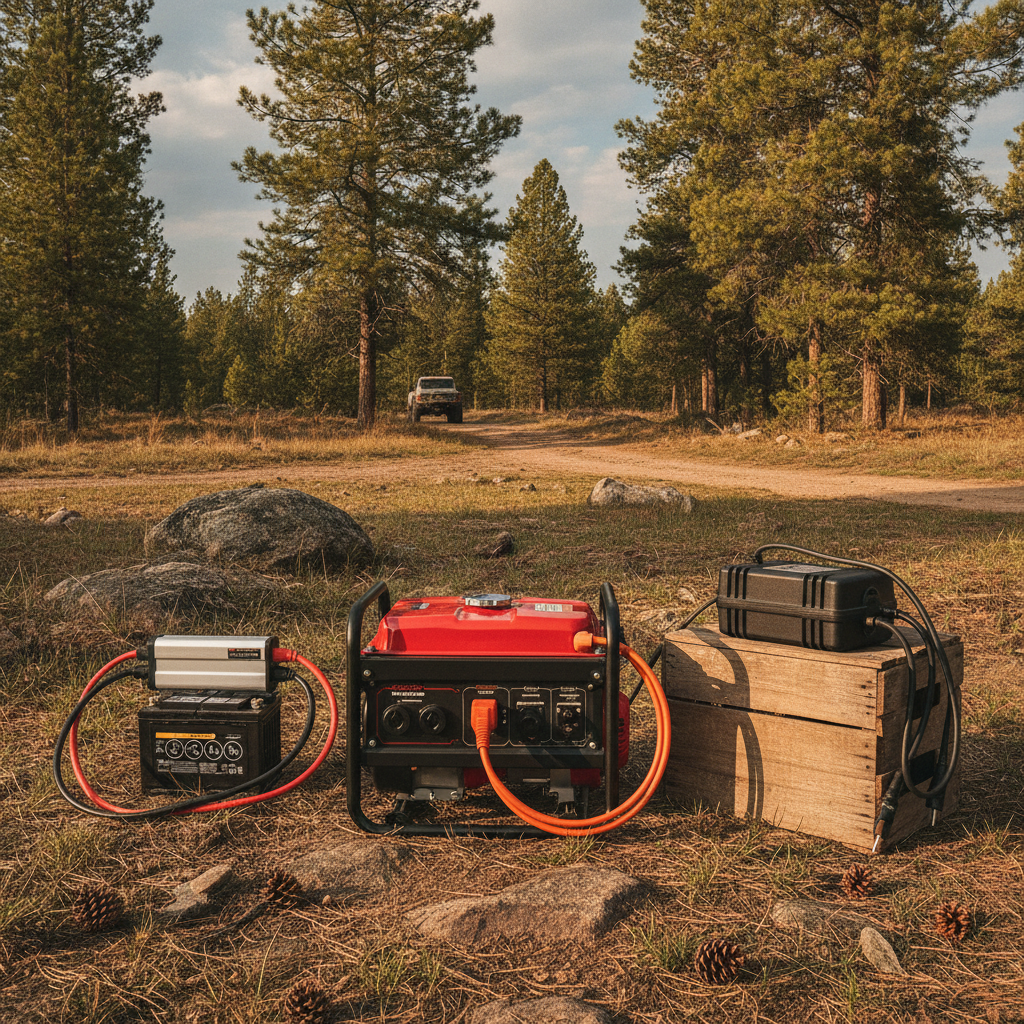
Search "camping generator" and you picture a gas engine droning all night. Here's the thing: most campgrounds have quiet hours, and plenty ban loud generators outright — and for a family tent trip, you're mostly charging phones, running a few lights, maybe a fan or a CPAP. You rarely need a roaring gas generator. You need quiet power. Here are the three ways to get it, and most families are happiest somewhere in the middle.
Our picks
Anker SOLIX C1000 Gen 2 Portable Power Station
The sweet spot for most families. Charge it at home — this one tops up in around 49 minutes — bring it, and it silently runs your lights, charges every device, and powers a CPAP or fan overnight, with a big 1,024Wh LiFePO4 battery and 2,000 watts on tap. No engine, no fumes, no fuel, and welcome in any campground because it makes zero noise. If you buy one power thing for camping, make it this. (A solar panel is optional; for a weekend, charging it full before you leave is usually plenty.)
View on Amazon →400W Car Power Inverter (12V to 110V)
The honest budget answer: your car is already a generator. This plugs into the 12V outlet and gives you two AC outlets plus USB-C and USB-A ports — so it charges phones and tablets straight off the USB and runs a laptop without blinking (we use one for exactly that all the time). The one rule: run the engine while you pull real power so you don't drain the car battery. What it won't do is run a hair dryer or coffee maker — heating appliances need far more than any car inverter delivers. For everything short of that, plenty of families never need more than this.
View on Amazon →Oxseryn 2800W Portable Inverter Generator
For the trips that genuinely need sustained, heavy watts. Unlike a construction-site screamer, this inverter generator runs around 58 decibels — about normal-conversation level — sips from a 1.1-gallon tank, and weighs under 40 pounds, so it's the kind you can actually run near other campers. Even so, check your campground's generator rules and quiet hours before you count on it: quiet still isn't silent.
View the generator →How to choose
First, what are you actually powering?
Be honest about the load. A family weekend usually means charging phones and a tablet, running LED lights or a lantern, maybe a small fan, a CPAP machine, or topping off a camera. That's a modest amount of power — nowhere near what a big gas generator puts out. Match the tool to that and you'll spend less and sleep quieter. (Running an RV air conditioner is a different story — that's where real generators earn their keep.)
The wattage trap (why your hair dryer won't run)
Here's where people get burned: anything that makes heat is a power hog. A hair dryer, coffee maker, toaster, electric kettle, microwave, or space heater pulls 1,000 to 1,500 watts — and a cheap car inverter (often 150 to 400 watts) won't run any of them. It just clicks off. Even a big battery station, which can handle the surge, drains shockingly fast on heat — a coffee maker or hair dryer can eat a serious chunk of the battery in a few minutes. The rule of thumb: phones, lights, laptops, fans, and CPAPs are easy; anything that heats up is a different league entirely.
So if you're after the real comforts of home — hot coffee at the push of a button, a microwave, a blow dryer — don't try to force it with a gadget. That's the signal you'd be happier with a camper that has proper electrical, or a campsite with a power hookup, where you plug into the grid and stop counting watts. (Or lean into camp life: a percolator on the stove makes better coffee anyway, and hair air-dries just fine.)
The honest cheap answer: your car is a generator
Before you buy anything big, remember your car already makes electricity. A cheap power inverter plugs into the 12V outlet and turns it into regular wall outlets and USB ports — enough to charge phones, laptops, and small devices. The one rule: run the engine while you draw real power, or you'll wake up to a dead car battery. For light charging it's all many families ever need, and it lives in the glovebox for about thirty bucks.
The sweet spot: a battery power station
For silent, charge-at-home, use-it-anywhere power, a battery power station is what most families actually want. You charge it at home, bring it, and it runs lights, charges everything, and handles a CPAP or fan overnight without a sound — and it's allowed in every campground because there's no engine and no fumes. No fuel to carry, nothing to start, nobody to annoy. If you buy one power thing for camping, make it this. You can add a solar panel to top it off off-grid, but honestly, for a weekend you'll rarely need to — charge it full before you leave, or refill it from the car.
If you genuinely need a generator: get a quiet one
Some trips really do need sustained, heavy power — long stays, big draws, an RV's appliances. If that's you, get a quiet inverter generator, not a construction-site screamer. A good one runs around 58 decibels (roughly normal-conversation volume), sips fuel, and is light enough to actually move. Even then, check your campground's rules and quiet hours before you rely on it — "quiet" still isn't silent, and many sites limit generator hours or ban them outright.
The honest bottom line
Most families overbuy here. Start by asking what you'll actually run. For light charging, your car and a cheap inverter cover it. For silent, worry-free power all weekend — including your lanterns and lights — a battery station is the sweet spot. Save the gas generator for when you truly need big, sustained watts, and even then, make it a quiet one.
Common questions
Dragonfly Supply is reader-supported. When you buy through links on our site, we may earn an affiliate commission — at no extra cost to you. We only recommend gear we'd actually pack.