The Best Portable Camp Stove & Grill for Family Camping
Published June 14, 2026 · Updated June 17, 2026
Beyond the campfire itself, there are two ways to round out the camp kitchen: a grill for burgers and dogs, and a two-burner stove for everything that happens in a pot — coffee, boiling water, soup. Most families need the stove first (you always end up boiling water) and add a grill for the flame-cooking they love. Want a flat-top for pancakes and eggs instead? That's its own thing — see our camping griddle guide. One honest warning before the picks, because nobody mentions it: the real question with either of these is propane, and getting it right is what keeps you portable instead of tethered to your backyard. I own both of these.
Our picks
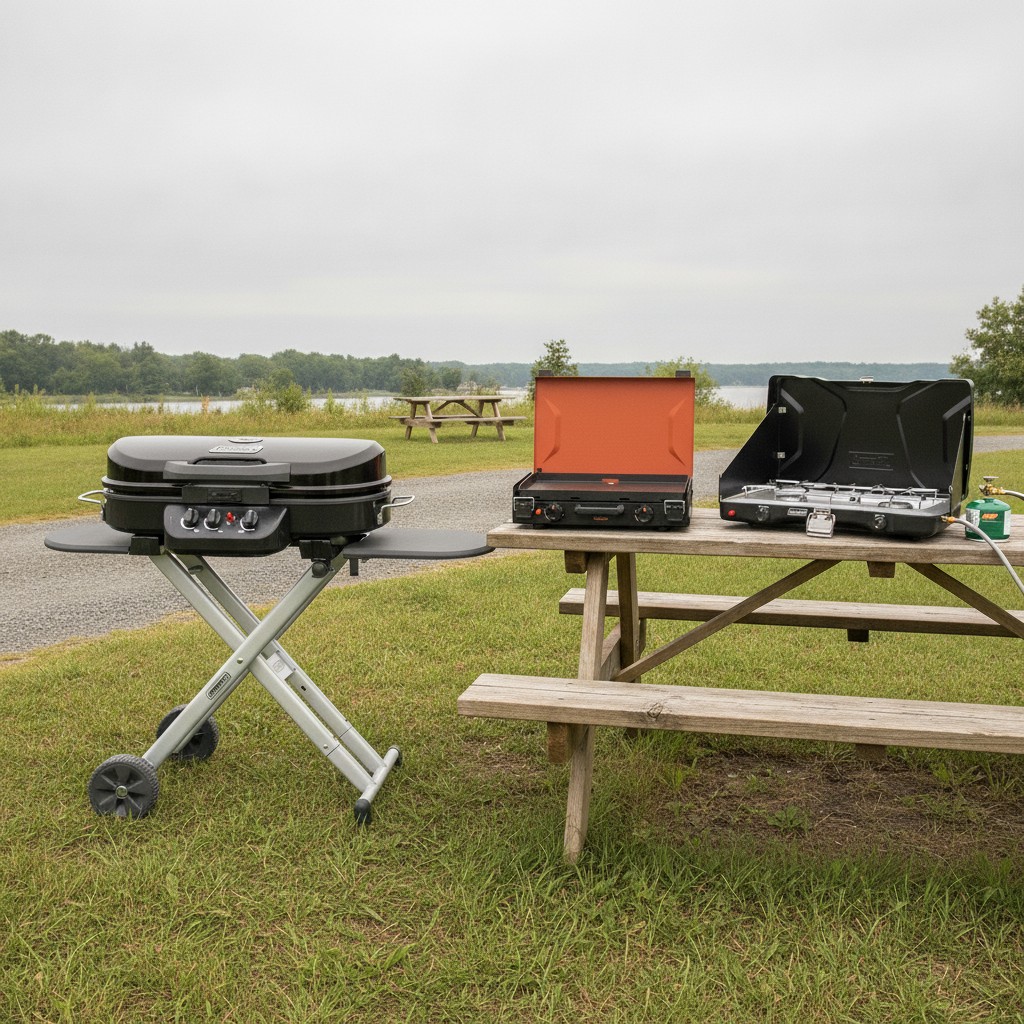
Coleman RoadTrip 285 Portable Stand-Up Propane Grill
The classic camp grill, and the one I own. It stands on its own legs so you're not hunting for a table to set it on, runs three burners you can hold at different heats, and lights with a push button — 20,000 BTUs, plenty for a full family cookout of burgers and dogs. They make a tabletop version too if you'd rather set it on a table and save the pack space. It runs off the small one-pound propane canisters, which is exactly what you want for staying portable.
View on Amazon →Coleman Triton+ 2-Burner Propane Camping Stove
Not a grill — a stove, for everything you do in a pot or a pan: boiling water, morning coffee, heating soup, simmering a one-pot dinner. Two adjustable burners, push-button ignition, wind guards so a breeze doesn't kill your flame, 22,000 BTUs. I own this exact stove; the only reason I haul a bigger three-burner is that I've got a truck to put it in. For most families, two burners is plenty.
View the camping stove →How to choose
The propane question (read this first)
Here's the thing nobody tells you: every one of these runs on propane, and how you feed it decides whether it's actually portable. The small one-pound green canisters screw right on, weigh almost nothing, and are the camping default — one or two will get you through a weekend. You can also run any of these off a big twenty-pound tank with a hose adapter, and the fuel works out cheaper that way. But be honest about what you're doing: if you're loading a full-size propane tank into the car to drag to a campsite, you've given up the portability that made the thing worth buying in the first place. Save the big tank for the patio. For camping, bring the little canisters — and a spare.
Stove or grill — which do you need?
Start with the stove. Every trip, without fail, you'll need to boil water — for coffee, for cleaning, for a pot of something — and a two-burner handles that plus most real cooking (pair it with a pot and a skillet and you're set). A grill is the upgrade if you love burgers and dogs over a flame. Plenty of families run a stove and the campfire and never buy a grill at all. And if it's a flat-top for breakfast you're after, that's a camping griddle, which we cover on its own page. There's no wrong answer; it's about how you like to cook.
You don't strictly need any of them
Worth saying plainly: the fire does a lot. Foil packets, a Dutch oven, a cast-iron skillet on the coals — that's real cooking with zero propane (the whole recipes section leans on it). A stove or grill isn't what makes camping possible; it's what makes it easier and faster, especially breakfast and coffee when everyone's cold and impatient. Buy for convenience, not necessity.
BTUs, burners, and wind
More burners means more flexibility — boil pasta on one, warm sauce on the other. More BTUs means a faster boil and better performance in cold or wind. But the quiet hero is the wind guard: a breeze will steal half a cheap stove's heat and leave you wondering why the water won't boil. The Coleman stove and grill both light with a push button, which beats fumbling with a lighter in the dark.
Don't forget the fuel and a backup light
Bring more propane than you think you'll need — running dry mid-coffee is a rough start to a morning. And pack a lighter or matches anyway; push-button igniters are wonderful right up until the one time they aren't.
Common questions
Dragonfly Supply is reader-supported. When you buy through links on our site, we may earn an affiliate commission — at no extra cost to you. We only recommend gear we'd actually pack.