
Best Camping Hammocks
Published June 12, 2026 · Updated June 14, 2026
A hammock is the easiest way to get a kid hooked on sleeping outside — no poles, no wrestling a tent in the dark, just two trees and about ten minutes. The trouble is the wall of near-identical options online makes a simple thing look complicated. Here's what actually matters, in plain terms, plus the three we'd hand a first-time family: a budget pick, the one we reach for most, and the one you'll keep for years.
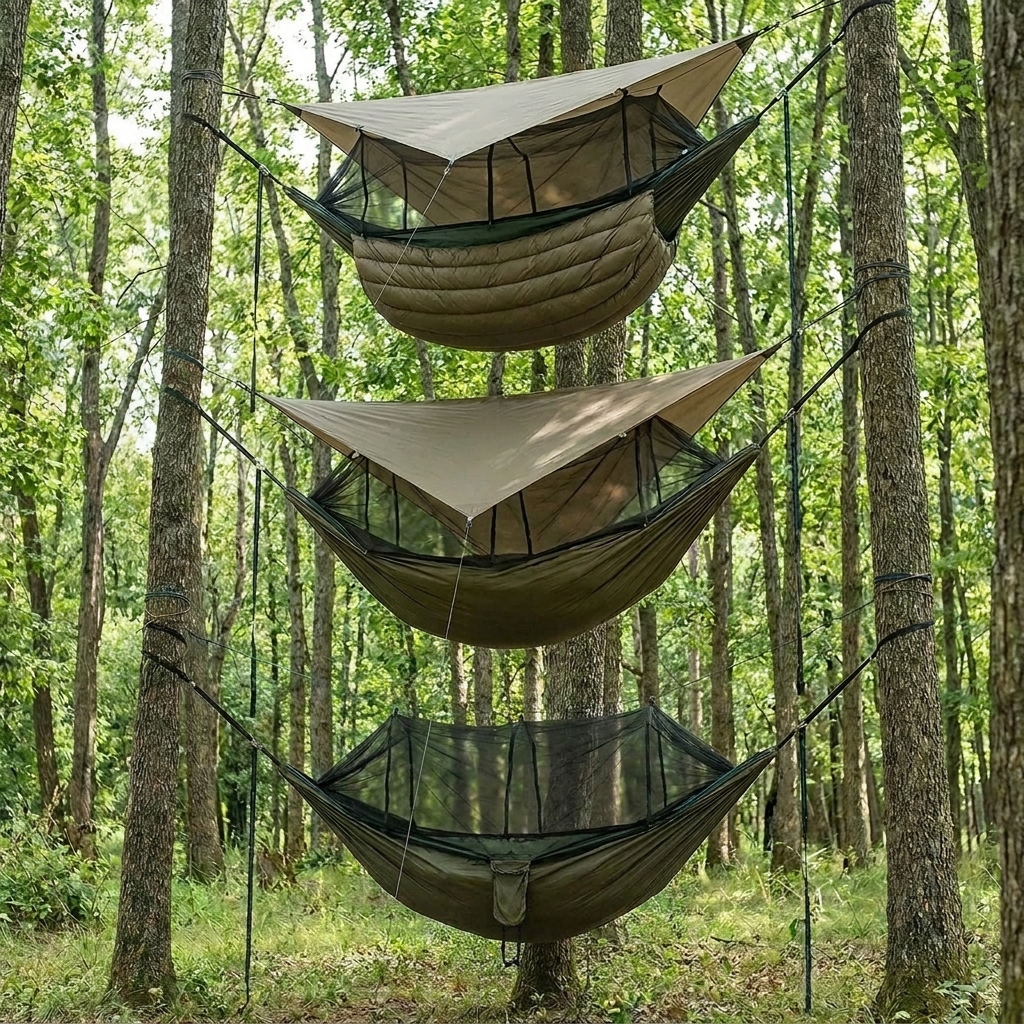
Our picks
Camping Hammock with Mosquito Net,
This Camping Hammock includes a mosquito net that can be on or off that creates a great resting experience
View on Amazon →Sunyear Hammock Camping with Rain Fly Tarp and Net
Sometimes it Rains. This Camping Hammock includes a mosquito net and a rain tarp to keep you dry.
View the tarp →CROSSHIP Camping Hammock with Mosquito Net with Underquilt & Rain Fly Tarp
Even a little chill at night can ruin a camping experience, This Hammock has all the bells and whistles including quilting
View the tarp →Best Choice Products Portable Hammock Stand
There are a lot of hammock stands on the market, some attach to the car, others are stand alone, this is an affordable stand alone model.
View on Amazon →How to choose
What size — single, double, or a true two-person?
For one adult, a "double" hammock is the sweet spot. The extra width lets you lie slightly diagonal, which is the whole trick to sleeping flat instead of folded up like a taco. Kids can share a double for lounging, but for actual sleep it's one body per hammock. If you genuinely want two people to sleep, look for one rated as "2-person" with the weight capacity to match — it's printed right on the label. When in doubt, size up. Nobody ever wished their hammock were smaller.
Do you need the built-in bug net?
Yes. On any summer or near-water trip, an integrated mosquito net is the difference between a great night and a miserable one, and it's the one feature we won't skip even on the budget pick. The good ones zip all the way around you and flip down out of the way when nothing's biting, so you're not staring through mesh on a clear evening. A net sewn into the hammock beats a separate add-on every time — fewer parts to lose, and nothing to rig by flashlight.
Staying dry when it turns
A hammock with no cover is a fair-weather toy. A rain tarp — sometimes called a "fly" — strings up over the top and turns it into an all-weather bed. And a surprise overnight shower is exactly the moment a first-time camper decides whether they love this or never do it again. Look for a tarp big enough to cover the whole hammock with a little overhang at each end; the ones included on better hammocks are usually sized right. If your pick doesn't come with one, buy the tarp before your first trip, not after.
The cold-butt problem nobody warns you about
Here's the surprise that gets everyone: a hammock sleeps cold. Your body weight squashes flat whatever you lie on, so the open air underneath quietly pulls heat out of your back all night — even when the evening feels mild. The fix is an underquilt: a layer that hangs underneath the hammock, not inside it, trapping warmth where you actually lose it. Below about 65°F you'll feel the chill; below 50°F you'll want the underquilt or you won't sleep. It's the single biggest jump in hammock comfort there is, and it's why our top pick comes with one.
No trees? A stand, or your car
Most of the time you won't need this — two healthy trees the right distance apart and you're hung in minutes. But first-time campers don't always get to pick their site, and plenty of campgrounds, beaches, and backyards just don't have the trees. A lightweight portable stand solves it: a folding steel frame you set the hammock on anywhere, including the backyard for a practice run before the trip. (You can anchor one end to a sturdy vehicle in a pinch, but a real stand is steadier and won't scratch your car.) If trees are never a sure thing where you camp, a stand earns its spot in the trunk.
Hanging it right — and how easy is setup, really?
This is the part beginners worry about and shouldn't. A good camping hammock comes with tree straps — wide webbing with sewn loops — and goes up in well under ten minutes once you've done it twice. The rule of thumb: straps at about head height, a gentle sag so the fabric makes a shallow smile instead of a tight line, and you lie slightly off-center. Skip anything that needs knots; the strap-and-loop systems are foolproof and far kinder to the trees. If a hammock's reviews complain the suspension is fiddly, keep scrolling.
Weight and packing
For car camping, weight doesn't matter — grab the comfy one and move on. If you're carrying it any distance, the whole rig (hammock, straps, net, tarp) lives or dies on packed weight, and the "lightweight" and "ultralight" models trim it to a couple of pounds without giving up the bug net. Heading out from the car with the family on trip one? Ignore this section entirely. Planning to hike in? It's the first spec to check.
Never hung one before?
It looks fiddly and it isn't — two trees, two straps, about two minutes once you know the trick. If it's your first time, here's how to set up a camping hammock without the sagging-butt-on-the-ground learning curve.
Common questions
Dragonfly Supply is reader-supported. When you buy through links on our site, we may earn an affiliate commission — at no extra cost to you. We only recommend gear we'd actually pack.